Stakeholders meet to validate draft competition policy
24-October-2014
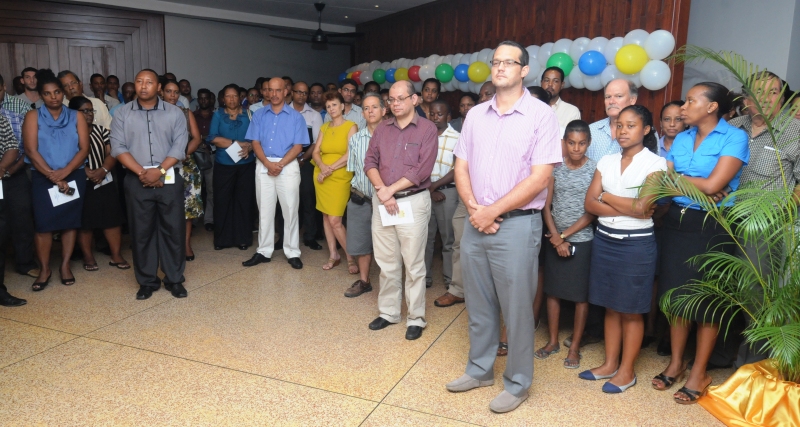
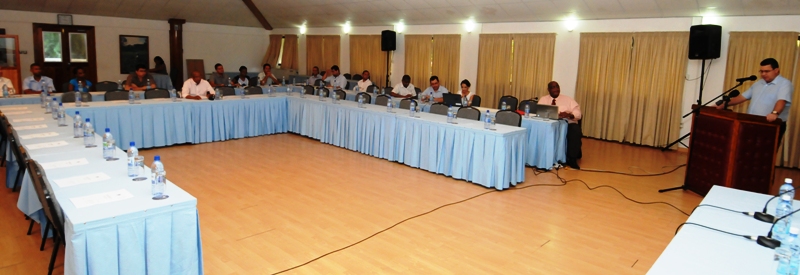
A draft national competition policy was presented to stakeholders in a validation workshop held on Wednesday.
Organised by the Fair Trading Commission (FTC), the Seychelles Stakeholders National Competition Policy Validation workshop was held at the Seychelles Trading Company’s (STC) conference hall.
This was the second stakeholders’ meeting which was facilitated by the chairman of the Competition Commission from the Common Market for Eastern and Southern Africa (Comesa) Alexander Kububa.
Present at the meeting were the Minister for Finance, Trade and Investment Pierre Laporte; FTC’s chief executive George Tirant, among other stakeholders.
Following the presentation of the Vountary Peer Review of the Fair Trading Commission’s laws and structure at the United Nations in Geneva last July, the Commission embarked on the creation of a national competition policy with the assistance of the Comesa Competition Commission.
The aim of the workshop on Wednesday was to iron out the draft policy so that a final document can be submitted to the Ministry of Finance, Trade and Investment by November.
The national competition policy aims at guiding government on applying laws, regulations, rules and policies that will allow businesses to compete fairly with each other so as to foster entrepreneurship activity and innovation.
The policy will also guide the Commission in the enforcement of the Fair Competition Act 2009 and will provide a platform upon which national policies can be harmonised with the existing competition law.
In his speech for the occasion, Minister Laporte said as with any regulatory rules that need to be enforced there generally exists the need to have a clear and well-informed policy available to guide the enforcers in the application of the law.
“The national competition policy is one that touches all sectors and is a set of measures introduced by government in stimulating competitions, protecting consumers and encouraging fair practices.
“It will allow the economy to move towards a system of policies which foster competitions with fair price and encourage innovation, efficiency and productivity,” said Minister Laporte.
He said it also ensures social gains such as poverty reduction and greater consumer welfare. “It is indeed this wide reach that the creation of competition requires participation of regulators, agencies or organisations from all the sectors in order for the Fair Trading Commission to effectively enforce the act,” said the minister, adding that in light of the beneficial effects of this policy on the Seychelles economy, the Ministry of Finance, Trade and Investment strongly supports the FTC in this extremely important venture.
As for Mr Kububa, he presented the guiding principles of the national competition policy of Seychelles which, to be effective, needs monitoring. It is also essential to prevent anti-competitive conduct.
He said the policy’s objectives should also be in harmony with other policies; there should be strategic policy consultation; mergers and acquisitions should be done in a transparent manner; abuse of dominance in markets which can lead to cartels should be wiped out, to name some.
He also stressed on the need for independence of the competition policy and the importance of the competition authority and sector regulators to work together.
Farm teams up with conservation body to promote locally grown food
24-October-2014
Anse Royale-based Geffroy’s Farm has teamed up with Nature Seychelles, a leading local environmental conservation organisation, to promote locally grown food.
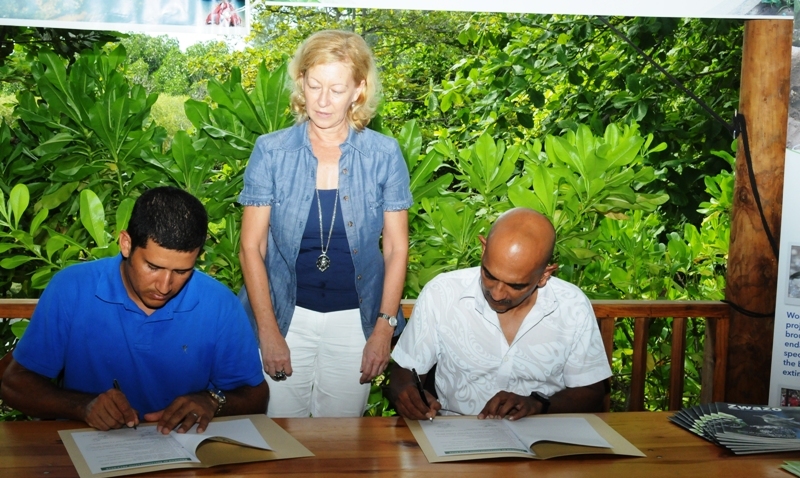
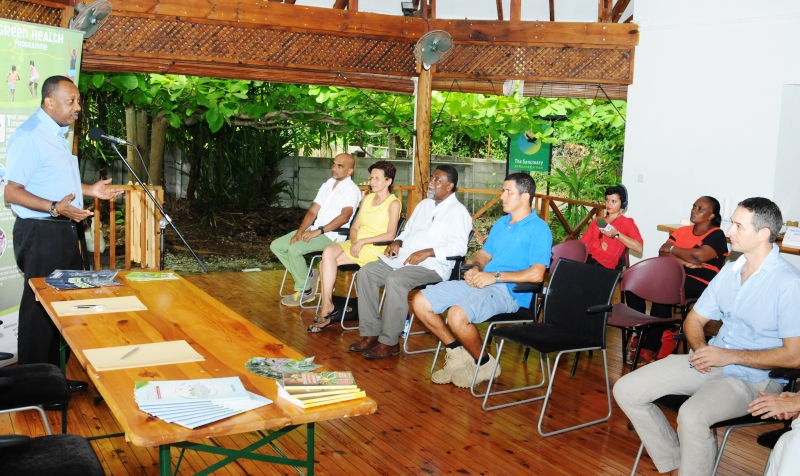
An agreement to that effect was signed yesterday between Nature Seychelles’ chief executive Nirmal Jivan Shah and the owner of the farm, Jean-Paul Geffroy. The signing ceremony took place at the Nature Seychelles’ Sanctuary at Roche Caiman in the presence of the Minister for Natural Resources Peter Sinon, special advisor to the minister Antoine-Marie Moustache, Nature Seychelles’ board members, among other guests.
It was after the publication of the second edition of Nature Seychelles’ ‘Grow and Eat your own Food Seychelles’ book that Mr Geffroy approached Mr Shah with the intention of establishing a partnership to promote locally grown foods.
“As Seychellois we need to take a step back to go in the future as nowadays Seychellois are consuming too much bad food that our forefathers did not consume and are getting diseases that did not exist back then,” Minister Sinon said.
“Today’s signing is a typical example of this year’s World Food Day theme -- ‘Feeding the world, caring for the earth’. We see a private sector working together with an organisation to help conserve the organic food in the country,” added Minister Sinon.
Dr Shah said Mr Geffroy has taken an old concept and turn it into a new concept resulting in a smart way to approach agriculture in this century.
“I was very impressed with his farm when I visited it at Anse Royale; he has climate smart green house that can adapt to climate change,” noted Dr Shah. During the ceremony Mr Geffroy gave Nature Seychelles a batch of seedlings so that they can be planted in the heritage garden.
“I am very excited and looking forward to working with Nature Seychelles. I was very impressed by the book and as a young entrepreneur and farmer who is starting to build a name for myself doing such gesture is a way for me to give back to society and Seychelles in general,” Mr Geffroy said.
Mr Geffroy is a self-taught farmer who uses eco-friendly farming methods at his farm at Anse Royale. Mr Geffroy is also on board the Miss Seychelles ... Another World 2014 ‘Healthy Living’ project and he has recently signed an agreement to help the Ministry of Natural Resources rebuild its plant laboratory.
29yenm Festival Kreol - Kiltir Kreol i pran kontrol lavil Victoria
24-October-2014
Sesel in pare pour met son pli zoli rob konmdir santer Joe Samy e nou asire ki i enn ki byen kolore e atiran pour sa 29enm Festival Kreol ki demare tanto avek louvertir ofisyel dan Stad Popiler aparti 6er30.
Sa festival, ki toultan en lokazyon pour regroup tou sa ki koze, viv, respir kreol, pou deroul depi le 24 ziska le 31 Oktob.
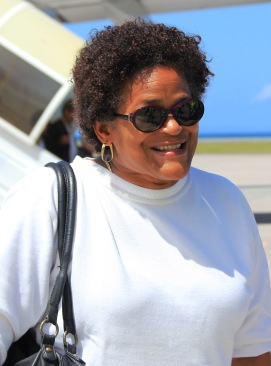
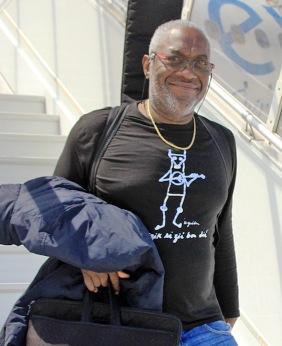
Yer apremidi bann santer dan group Kassav ti debarke lo Erport Enternasyonal Sesel apre ki zot ti’n voyaz abor Air Seychelles pour vin vizit nou pandan sa letan ki Victoria, kapital lemonn kreolofonn, i akey son bann zanfan, zanmi ek fanmir kreol. Jacob Desvarieux ek Jocelyne Béroard, sa de manm group Kassav ki pli popiler, ti koz avek medya lokal e dir ki zot tre enpasyan pour performen demen.
«Mon tre kontan pour retourn Sesel pour en lot gran spektak. Mon’n anmenn ankor lanmizik zouk,» Jocelyn ti dir. Jacob li i ti dir ki i enpe fatige me ki tou keksoz pou OK pour sa gran konser.
Jacob Desvarieux ek Jocelyne Béroard, sa de manm group Kassav ki pli popiler, letan zot ti pe debarke lo erport Pointe Larue yer bomaten
Dernyen fwa ki sa group ti perform Sesel ti an 1991 e nou asire bokou i ankor rapel sa lanbyans formidab. Alors, pa tarde al aste ou tiket pour sa enn konser ki pou fer demen, Sanmdi le 25 Oktob Stad Popiler.
Group Martinike Kassav pou osi met lanbyans pandan louvertir ofisyel sa festival tanto. Nou espere ki zot in reekout bann sanson parey Zouk La Sé Sél Médikaman Nou Ni, Syé Bwa, Wép, Soleil, Maman Kréyol, Mwen Alé, Fabiola ek Ba Nou Zouk La pour zot kapab partisip aktivman dan sa spektak.
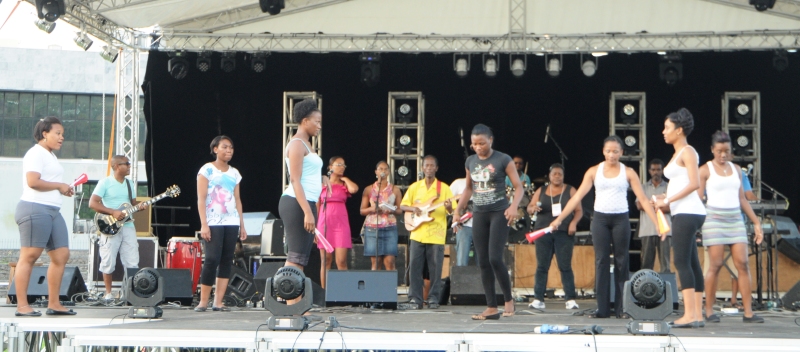
Yer, lavey louvertir ofisyel sa festival, bann group, mizisyen ek santer Seselwa, Renyonnen ek Rodrige ti met bann dernyen latous avek zot preparasyon avan montre piblik ki zot annan pour ofer.
Lavil Victoria in osi ganny dekore pour sa Festival Kreol ki en levennman spesyal lo nou kalandriye nasyonal kot nou selebre nou kreolite ek kiltir, e zwenn ansanm avek lemonn Kreolofonn.
Bann moniman tel ki Bisantener, Linite ek Lorloz in ganny dekore avek bann diferan formasyon lalimyer. I osi annan bann tablo ki’n ganny met anpandan lo Laveni Lendepandans lo sak kote semen. Sa bann tablo fer par bann diferan artis renonmen dan Sesel in ganny reprodwi e ganny fer lo en pli gran dimansyon.
Bann aktivite lo progranm sa enn festival i enkli Moman Kreativite, Fon Lanmal, Bal Asosye, trwa foronm lo tinge, moutya e larsitektir tradisyonnel.
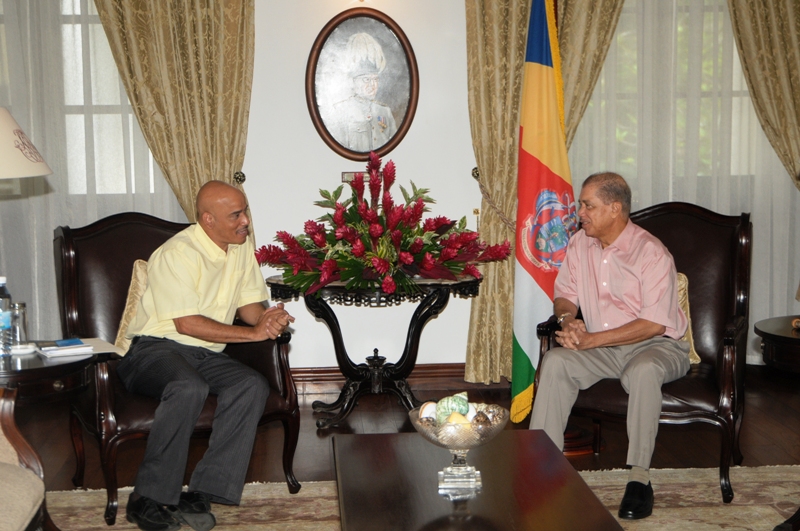
Current issues of national importance were discussed during a meeting yesterday between the leader of the opposition in the National Assembly David Pierre and President James Michel.
This monthly meeting between the two leaders took place at State House.
Discussions focused on such topics as the ongoing ebola crisis, the declining strength of the rupee against major foreign currencies, new markets for tourism, foreign direct investments (FDI), renewable energy, corruption, and the fate of the three Seychellois convicts in Egypt who are facing the death penalty.
Regarding the current strength of the rupee, Mr Pierre said the government should do whatever it can to stabilise our national currency on account of its negative effect on commodity prices, especially the essential ones, and the subsequent effect on the lower income earners of our population.
Related to that, the leader of the opposition also touched on the FDI which he said is important for the country to continue attracting it as a decline in foreign exchange earnings in this area creates a negative effect on the strength of the rupee.
On tourism which he said is directly linked to the economy, the leader of the opposition said that the country should target markets that will bring a return.
“There is a lot of markets out there like China, South Africa, the Gulf where there are people who have money and are ready to spend if they come here,” he said. Mr Pierre said that as a Seychellois and leader of the opposition he would never like to see even one case of ebola enter the country. “I appreciate the preventive measures being undertaken to prevent ebola from entering our country,” he said, adding that he would prefer things are done to the maximum to prevent this from happening.
On renewable energy Mr Pierre said that the amount of foreign exchange that goes into buying fuel is seventy-five per cent of the country’s total earnings. He considered this to be too high and not sustainable.
He suggested there are two things that can be done in this area. That we invest in renewable energy like in a solar farm for alternative energy so as to considerably reduce the amount spent in importing fuel for that purpose in the next five or ten years. And then we need to educate the people on the way to use energy and that the country imports energy-saving equipment.
Regarding the three Seychellois on death row in Egypt, Mr Pierre said as a Seychellois and a human being, he finds it tough for someone to be sentenced to death in a foreign country.
He said the efforts for clemency for the captives being pursued by President Michel was also discussed. On the issue of corruption Mr Pierre suggested a specific law which deals with that issue saying that the existing legislation partially deal with the subject and they are not enough.
“And through this law we can have a provision for an anti-corruption commission,” Mr Pierre said, adding that both he and the President agree that this is an important issue.
East Africa Standby Force experts meet in Seychelles
21-October-2014
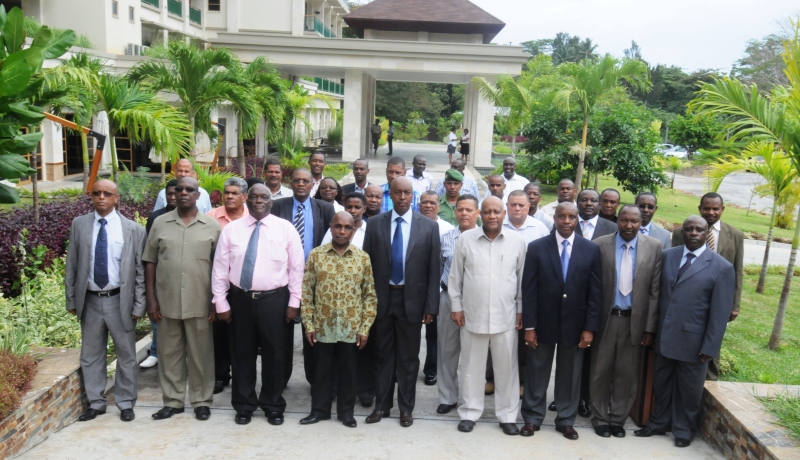
Heads of defence forces, police chiefs and other experts from the East Africa Standby Force (EASF) 10-member countries are holding their working group meeting in Seychelles.
The two-day meeting was officially opened at the Savoy Hotel at Beau Vallon yesterday morning by the Commissioner of Police Ernest Quatre. The EASF experts’ meeting will be followed by the 12th extraordinary session of the Eastern Africa Committee of Defence and Security (EACDS). The two-day session will start on Wednesday.
Among the numerous issues related to security, peace and stability in the region to be discussed, also high on the agenda is the finalising of details for the new regional standby force expected to be deployed in December.
It was during a meeting in Kigali, Rwanda in August this year that the defence and police chiefs pledged to deploy some 5,000 troops to the force to be deployed by December to tackle insecurity that is mounting in the East African region.
During yesterday morning opening of the meeting EASF director Chanfi Issimail confirmed that “the force will be operational this December, one year ahead of schedule, with a seven-day deployment readiness standard”.
“It is now more than a conviction that together we will realise the EASF vision, mission, mandate and promote peace, security and stability to greater heights,” Mr Issimail pointed out.
The force is receiving the support and backing of the African Union (AU) which is pushing for a 2015 deadline for each of the five regions — East, West, Central, North and Southern Africa — to develop their own standby forces.
Welcoming the experts before opening the meeting, Mr Quatre stressed Seychelles’ “readiness and determined resolve to fully support the mission of the EASF where it is in our power and ability to do so”.
“The Seychelles Police, a civilian law enforcement agency, is supportive of and commends the work being done so that our region can stand shoulder high to proclaim that yes indeed we have committed ourselves to preserving the rule of law that our respective societies are founded upon. We are gathered here to consider and propose that we stand together to reject disorder in support of order,” Mr Quatre stressed.
The member countries of the EASF are Burundi, Comoros, Djibouti, Ethiopia, Kenya, Rwanda, Seychelles, Somalia, Sudan and Uganda.
New Egyptian Ambassador Accredited to Seychelles. Clemency sought for Seychellois detainees as Seychelles and Egypt seek to develop closer partnerships
Tue, 21 October 2014 The new ambassador of the Arab Republic of Egypt to the Republic of Seychelles, H.E. Mahmoud Ali Talaat Mahmoud, presented his credentials to President James A Michel at State House this morning in a ceremony attended by the Minister of Foreign Affairs, Mr Jean-Paul Adam and by the President’s Diplomatic Adviser, Ambassador Callixte d’Offay.
An important issue raised during the talks this morning concerns the three Seychellois who are facing the death penalty in Egypt after being convicted of drug trafficking and losing their appeal. President Michel reiterated to Ambassador Talaat his appeal to President Abdel Fattah el-Sisi for clemency leading to the commutation of their sentence. Ambassador Talaat remarked that President Michel and his Government “have spared no effort in that matter, even sending a Special Envoy to Egypt where he met with the Egyptian Minister of Foreign Affairs yesterday”. The Ambassador added that he would also convey President Michel’s message to President Abdel Fattah el-Sisi.
Speaking to the national media after the accreditation ceremony in the presence of the Minister for Foreign Affairs, Jean-Paul Adam, Ambassador Talaat said that he had very fruitful discussions with President Michel on bilateral relations and further collaboration between Seychelles and Egypt. “We should do more in the field of trade, using what we have now, which is COMESA,” noted the new Egyptian ambassador. He added that there are a number of agreements that could be initiated, Egypt being in a position to provide Seychelles with experts in various fields, especially in the health sector.
The two countries are keen to seek ways and means of enhancing their bilateral relations that exist as well as developing new partnerships in such areas as trade, investment, health, agriculture and military operations, among others.
Ambassador Mahmoud Ali Talaat Mahmoud is based in Nairobi.
Final Approach Nauru island (Tatters/Flickr) Photo License: (CC BY 2.0)
3
Google +0
99
Send to Kindle
(Seychelles News Agency) - Small children frolic in the surf near a giant old phosphate conveyor, its rusted metal gantries twisted in a slow-motion state of collapse into the sea. This is Nauru, a tiny, circular South Pacific Island of under 10,000 people suffering the consequences of the poor decisions of its leaders, and fighting on the front lines of climate change.
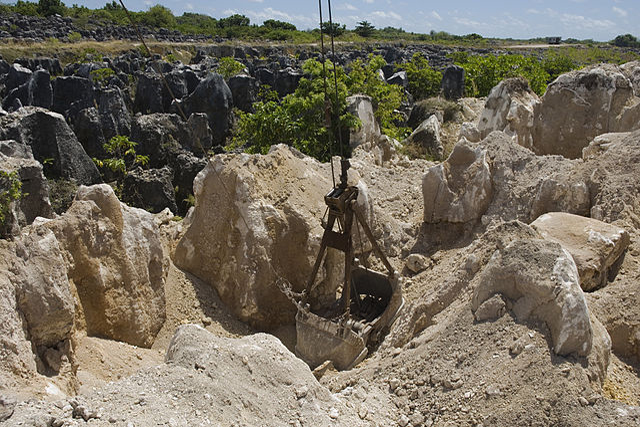
The inner circle of the island resembles something of a lunar landscape in the dry months – the product of a hundred years of mining phosphate deposits directly out of the surface of the ground, leaving large pillars of limestone behind like stalagmites standing in a desolate landscape.
Now that the phosphate is all but mined out, and the ships no longer wait at the shore to be laden by the conveyors, what is left is a stark warning for all small island developing states: no natural resource lasts forever.
The phosphate is all but long gone, and the cash-strapped country, once with the second-richest GDP per capita, now brings in foreign exchange primarily through the sale of fishing licenses for its territorial waters and through the recent establishment of a detention centre to house 1,200 refugees from Cambodia who have applied for asylum in Australia some 4,500 km away.
Although the Nauruan government is heavily reliant on hosting the Australian detention facility, Nauru has received even more bad press, with NGO Save The Children reporting a spate of refugee children self-harming themselves after the Australian government announced that Cambodian refugees would be excluded from the reintroduction of temporary protection visas.
Frozen bank accounts
Earlier this week the Nauruan government warned that it would no longer be able to keep the country or its Australian detention centre running after a US-based hedge fund won the right to freeze the country’s bank accounts in Australia.
Firebird Global Master Fund is seeking the repayment of government bonds issued on the Japanese stock exchange in the 1980s, which the Nauruan government defaulted on. After a Japanese court ruled against Nauru in 2011, the amount went unpaid, allowing interest to almost double the original sum.
Now seeking a total of A$31m ($27m), Firebird went on to obtain a court order to freeze the nation’s bank accounts, leaving Nauru’s unable to pay its public servants or keep the electricity generators running.
Nauru managed to turn the tables on Firebird this Friday, with the New South Wales supreme court agreeing that the island nation’s Australian accounts were protected by sovereign immunity.
But this is not the end to Nauru’s financial woes, as Firebird still has a week to appeal the ruling and it seems that other unpaid creditors may also be circling overhead.
Environmental devastation
According to the United Nations’ Framework Convention on Climate Change, more than two-thirds of the island is uninhabitable as a result of strip mining and almost 40 percent of the marine life around the island has been decimated.
The people, too, pay a heavy price. Nauruans have been given the dubious honour of being the most obese people in the world: according to a 2010 study, a shocking 97 percent of men and 93 percent of women were overweight or obese.
Nauru also has the world's highest level of type 2 diabetes linked to this obesity, with more than 40 per cent of the population affected, owing to the lack of fresh produce and an abundance of cheap, unhealthy fried foods and imported sugary mass-produced snacks.
First called Pleasant Island by British sea captain John Fearn, who was the first Westerner to visit the island in 1798 in search of whales to hunt, the island is a forlorn shadow of what once was. It seems the islanders are all too aware that their international image, once a source of pride, is now one of defeat.
The island’s only hotel stands in ruins, not having been maintained since the 1980s, and the shells of homes, schools and factories serve as an unbearable reminder of the good times when Ferarris were once imported to the 21 square kilometer island and a fleet of Boeing 737 aircraft was bought to service the island’s tiny airstrip.
The Nauruan government, which established a trust fund from the proceeds of its phosphate mining, had over a billion Australian dollars by the 1980s, with which they bought planes, ships and international hotels.
But when the phosphate ran out soon afterwards, the island’s debts began to mount and much of the trust’s assets were sold.
Now, over 90 percent of the population is unemployed, and of the employed, over 95 percent are employed by the government, meaning the country has virtually no private sector.
The site of secondary mining of Phosphate rock in Nauru, July 05, 2007. (Wikimedia) Photo License: (CC BY 2.0)
A global voice on climate change
Nauru can be considered a terrifying harbinger of what could be for many small island developing states. Facing environmental devastation, economic disaster and a health crisis, the island is also on the front lines of the climate change war.
Situated in one of the deepest parts of the Pacific Ocean, and with the large majority of the population residing on the habitable outer rim of the island, the Nauruan people may become some of the first climate change refugees themselves if sea levels rise more than a metre by 2100, according to scientific projections.
The warning is also particularly poignant for other small island states, which face similar challenges: scarce resources, lack of arable land, physical remoteness and the at times overwhelming temptation to sell out to big corporates and developed nations to solve financial difficulties at the cost of their natural environment or even their sovereignty.
The Seychelles, an Indian Ocean archipelago of 115 islands off the eastern coast of Africa is no stranger to these challenges, and after being plunged into a financial crisis brought about by crippling public debt levels and the global financial crisis in 2008, the nation brought in the IMF to assist with a debt restructuring economic reform programme.
Generally regarded as a good example of post-default reform, the economy of the Seychelles is gradually opening up, but the free market brings challenges of its own. Now flooded with cheap imported meat and processed foods, the islands face an obesity and diabetes epidemic of their own as fish and other healthy traditional foods fall by the wayside.
Drugs have also found their way into the Seychelles, as figures released in a study carried out by the Seychelles Ministry of Health in 2011 revealed a high number of heroin users in the country.
In a 2013 report, the United Nations claimed that Seychelles had one of the highest percentages of intravenous drug users in the world, although the percentage of heroin users is now estimated to have decreased by 20% this year, according to the Seychelles National Drug Enforcement Agency.
The Seychelles also stands on the brink of a possible oil and gas discovery. Several multinationals have bought exploration rights for areas of seabed within the 1.5 million square kilometre Exclusive Economic Zone (EEZ) of Seychelles.
Government officials are now in the process of formulating legal and institutional frameworks to ensure that the country would benefit as much as possible from any potential oil finds.
The Nauruan example, although tinged with despair and sorrow, is one that no small island state should forget: sustainability and care for the environment must be put above all else to safeguard future generations.
- See more at: http://www.seychellesnewsagency.com/articles/1507/From+riches+to+regret++lessons+to+be+learned+from+the+South+Pacific+island+of+Nauru#sthash.i7Iwdgri.dpuf
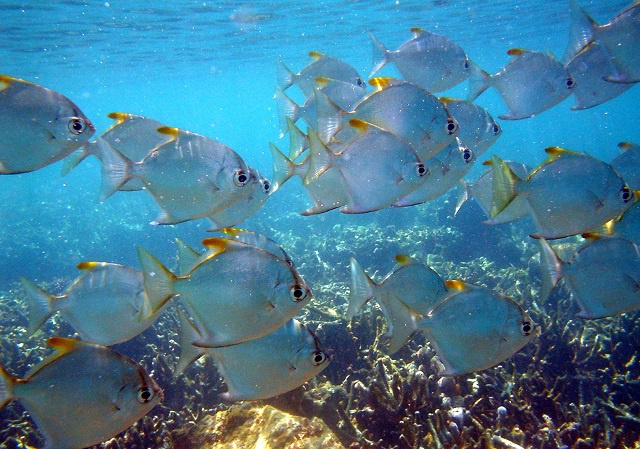
School of Monodactylus argenteus swimms above dead corals at Madagascar (Brocken Inaglory/wikipedia). WIOMSA promotes the educational, scientific and technological development of all aspects of marine sciences in the Western Indian Ocean region. Photo License: CC BY-SA 3.0
(Seychelles News Agency) - The Western Indian Ocean Marine Science Association (WIOMSA) has just released its Annual Report for 2013 which gives major insights on the impact of Seychellois scientist Dr. Nirmal Shah in the continent’s ocean affairs.
Special mention is made of Shah who is the immediate former WIOMSA President. For the last four years Shah has been presiding over the WIOMSA Board which is a rare feat for Indian Ocean island nations as in the last two decades of WIOMSA’s existence the association’s presidency was traditionally dominated by Kenyan and Tanzanian nationals.
Shah, well known in Seychelles through the conservation work of Nature Seychelles which he heads became the first president of WIOMSA hailing from the island states. WIOMSA whose headquarters is in Zanzibar is the largest home-grown regional professional marine and coastal science non-governmental organisation covering Southern and Eastern Africa together with the Western Indian Ocean islands.
It is a membership-based organisation drawing members from Seychelles, Comoros, Mauritius, Reunion, Madagascar, South Africa, Mozambique, Tanzania, Kenya and Somalia. Made up of marine scientists, coastal practitioners and institutions involved in marine science research and development WIOMSA boasts of 50 institutional members and close to 1000 individual members.
The Seychellois scientist has been described as “resourceful” and of “sharp intellect” by his peers at the organisation. Dr. Jacqueline Uku, who hails from Kenya, is succeeding Shah at the helm of WIOMSA. She is a senior research scientist at the Mombasa-based Kenya Marine and Fisheries Research Institute (KMFRI) with a background in ecology and physiology of marine flora and pays glowing tribute at Shah’s tenure.
“It is a challenge taking on the Presidency after Nirmal Shah as he is a tough act to follow.” Dr. Uku writes in the report. “He was a decisive and resourceful leader of the Board, with a sharp intellect and clever wit and he will be remembered for the tenacity he brought to all endeavours, his strong support of WIOMSA’s collaborative culture and his vision for the Association and the region as a whole.”
Just like its name suggests, WIOMSA ideals are pegged on “promoting the educational, scientific and technological development of all aspects of marine sciences with a view toward sustaining the use and conservation of its marine resources.” WIOMSA’s work involves rolling out numerous programs including research grants, training and skills enhancement programs and running multiple communications platforms which include a marine scientific journal, technical ocean science books, and general readership magazines among others related endeavours.
Through its Marine Science for Management (MASMA), the promotion of marine science and the enhancement of skills among coastal managers in the region ranks high in WIOMSA’s agenda. It is on the fulfilment of this agenda that the intervention of Shah is acknowledged by his colleagues.
Long serving WIOMSA’s Executive Secretary, Dr. Julius Francis has high praise for Shah confessing of the Seychellois’ dedication to the regional body and the general welfare of marine professionals in the western Indian Ocean.
“We are particularly indebted to Nirmal Shah as president who has been with WIOMSA from the very beginning and has served as the longest WIOMSA Board Member.” Dr Francis, who is himself a well-known oceanographer and previously served as the director of Tanzania’s Institute of Marine Sciences based in Zanzibar says. “As the President of the Board, he (Shah) dedicated himself to the improvement of the association and went beyond serving on the board often at personal expense with amongst other countless endeavors serving as the Editor of the WIOMSA Magazine. He has led the Board with utmost professionalism and his exemplary service brought honour and recognition to every WIOMSA member and to marine science wherever he engaged in the business of the association.”
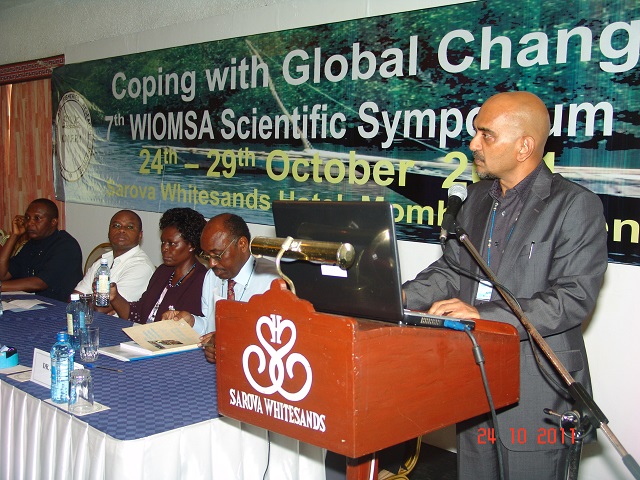
Former WIOMSA President Dr Nirmal Shah at an event organised by the association in October 2011. Photo License: CC-BY
The 64-page annual report is a showcase of the direction that WIOMSA is taking and places much credit to the role played by Shah in giving the association a new impetus.
“When I reflect on my Presidency, the term game-changing comes to mind as there have been monumental and significant shifts for the Association,” Shah says.
WIOMSA has accomplished much over the past four years under Shah’s presidency including going into what Dr Francis describes as “completely new territories” with the WIOMSA Trust Fund, the introduction of institutional membership, the new MASMA program and its proof of concept approach, establishment of a consulting function, and larger institutional grant schemes.
In an interview with SNA Shah says he believes that the structures he put in place not only as president but over the last 15 years as an elected member of four WIOMSA boards will greatly help scientists from the island states to venture into marine science scholarship.
“I would like my success in the region to inspire young Seychellois scientists......If the future of Seychelles is the ‘Blue Economy’ then we definitely need science to underpin it.”
- See more at: http://www.seychellesnewsagency.com/articles/1502/Seychellois+scientist+acclaimed+for+leadership+by+the+largest+regional+marine+research+organisation#sthash.7DCLglc0.dpuf
Cable & Wireless Seychelles has brought its services closer to the public and its customers through the introduction of cable kiosk.
It is an automated self-service booth that allows a customer to purchase various products and services from one of several convenient locations at any one particular time. It is for both prepaid and postpaid services users.
The cable kiosk for the time being provides services such as bill payment, eTopUp, data and talk booters, prepaid Broadband vouchers and iSurf vouchers. It accepts only bank notes and coins (R1 an R5) as means of payment. It works 7 days a week and provides a 24-hour Cable & Wireless service only. It is touched screen and provides a receipt upon completion of transaction.
Regardless of whether a customer has a prepaid or a postpaid account, she or he will be able to purchase some products and services without any additional requirements. One will only need to have the exact amount in change to pay for the product of service as well as the account number or mobile number.
There are two main types of cable kiosks. The outdoor kiosk is fitted in concrete wall and the indoor kiosk which is heavy but movable is fitted with an additional secondary screen on top for messages or advertisements.
In a small introduction of the kiosk for its staff and the media at the CWS’ Customer Experience Centre in Sunshine House Providence last week, the company chief executive Charles Hammond said the Cable kiosk is an idea of one of its staff – Allain L’Etourdie, engineer for technical sales support.
He said with more feedback from customers the company will add up more features like credit card and E-payment facilities to the cable kiosk. Mr Hammond noted one of the many objectives of Cable & Wireless is making sure that Seychelles is put on top and gets the best in telecommunication. Mr L’Etourdie said he got the idea of having the machine here as he saw it being used in European countries.
According to Cable & Wireless, Seychelles is the first country in the Indian Ocean region and Africa to introduce the kiosk after the Caribbean and other countries in Europe.
Cable & Wireless will install 25 cable kiosks around Mahé, Praslin, and La Digue in the first phase of the project mostly in various highly frequented strategic locations.
So far nine cable kiosks are successfully operational. There are three outdoor kiosks – one at the CWS customer service centre in Victoria, another near Barclays ATM outside Cable & Wireless in Victoria, and a third at the CWS experience centre at Beau Vallon.
The six others, all indoors, are located in OJ Mall in Victoria, at the Fishtail Restaurant (Inter Island quay), at Butcher’s Grill (Unity House), at the STC Victoria super market, at the Amitie airport on Praslin, and at the CWS customer centre at Grand Anse Praslin.
The cable kiosk in the customer experience centre in Sunshine House Providence will be operational shortly.
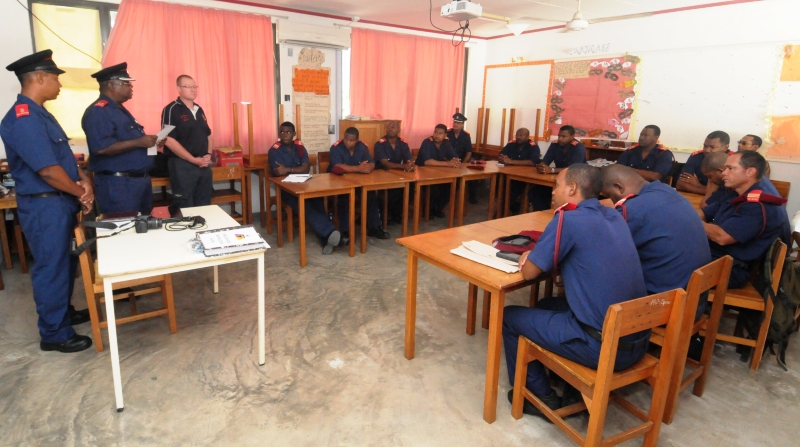
Twelve firefighters from the Seychelles Fire and Rescue Services Agency (SFRSA) are attending a two-week ‘Fire Officer 1’ course. The training was officially launched yesterday at the Seychelles Institute of Teacher Education (Site), Mont Fleuri.
The SFRSA’s divisional officer, Regis Bethew, said in his opening speech that the SFRSA is very committed with its ongoing development programmes whereby staff capacity is one of the core obligations which remain on top of its agenda all year round.
“We totally believe in such investment as it is worthwhile and the only way forward in order to keep improving the continuity of the agency’s capability to give reliable support or assistance to members of the public and community at large, mainly in fire protection and life threatening situation. This course is indeed another step in this direction,” Mr Bethew said.
The course instructor, Andre Raijmakers, urged all those attending the course to make the most of it. “You will be able to take forward what you are learning and how to face challenges. We will also talk about how the local fire service work and how to become good leaders in every situation.”
After the two weeks of training, all those who are taking part will receive a certificate.
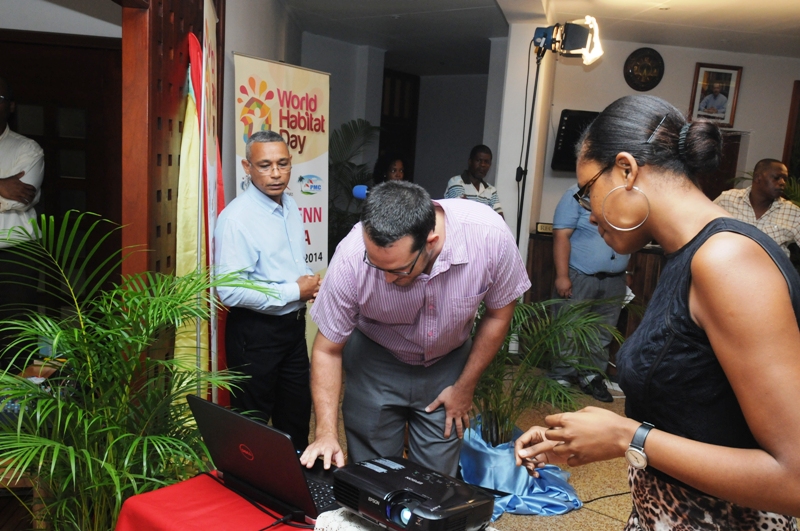
Licensed agents can now submit applications for development proposals via the internet from anywhere at anytime. This follows the launch yesterday of the first planning authority online system in Seychelles.
This e-service was officially launched by the Minister for Land Use and Housing Christian Lionnet in a ceremony held in the lobby of Independence House where the ministry’s headquarters is based.
Among guests present were the leader of the opposition in the National Assembly David Pierre, principal secretaries, members of the National Assembly, high officials and staff of the ministry, as well as other partners like DICT (Department of Information Communication Technology).
The event coincided with this year’s Habitat Week which is being celebrated this week.
In his speech to mark the occasion, the chief executive of the Seychelles Planning Authority Gerard Hoareau said the event celebrated a further milestone which showcases the persistent effort of President James Michel to modernise government services through state of the art technology.
“This is in a bid to add value to the current service. I am honoured today to witness the launch of the very first online submission in our sector of operation. The long-awaited e-planning portal that aims not only to speed up but to facilitate the planning application process and to create awareness through active repositive of surpassed ideas and best practices in a flexible working environment and its user friendly facilities,” Mr Hoareau said. He noted that the system has been proudly developed and commissioned locally by young Seychellois professionals.
Mr Hoareau had words of thanks to Minister Lionnet for having been the driving force behind the realisation of the project and to all those who worked towards its realisation, especially the management and staff of the DICT.
To use the system an applicant has to open his internet browser and navigate to URL https:://eservice.gov.sc/eGateway/Homepage.aspx. The person has to enter their credentials like (eID, password and access code if the applicant is an organisation or eID and password if they are an individual) and click on the Sign In button. Click on Planning Authority E-Service link. The page e-Service Gateway will be displayed.
Click on the Planning Application type you wish to submit in the Getting Started section for your submission. Enter all relevant information in boxes provided and upload all relevant documents. Declare and click on Save Application button.
Click on All Planning Application link on the Home Page of the eSubmission and click on the View link to view the planning application details including the current status of the Application.
You can also submit an appeal, make a re-submission, request renewal as well as submit substitutes and supplementary plans to an existing planning application.
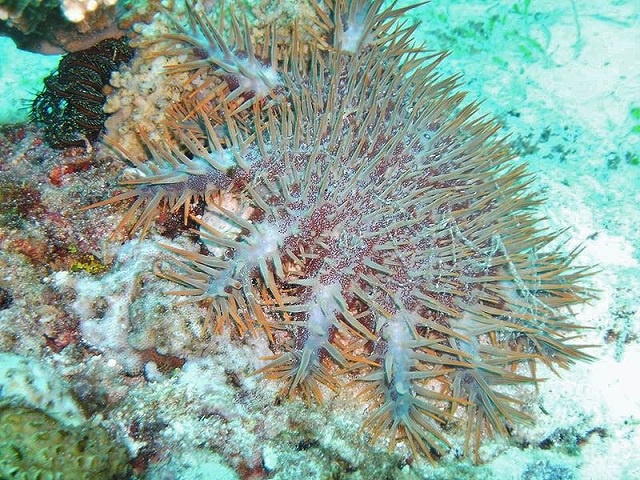
(Seychelles News Agency) - Diving enthusiasts in the Seychelles waters are often encountering a crown-shaped starfish with several hundred elongated and sharp, venomous spikes as coral reefs have become plagued by this unusual threat.
The Beau Vallon region in the northern part of the main island of Mahé is reported to have been the main area of activity of the crown-shaped starfish which according to divers can be seen on reefs between 5 to 25 meters deep and are not very common in shallow waters.
This type of starfish, named crown-of-thorns starfish (COTS), is considered as one of the largest sea stars in the world.
It occurs naturally in different tropical regions including the Seychelles, an Indian Ocean archipelago of 115 islands with a small population of 90 thousand, many of whom are entirely dependent on the ocean for their livelihoods.
In low densities, the starfish can be beneficial to coral reefs as it feeds on fast-growing corals, allowing a greater variety of coral species to colonize the reef.
However, in high densities the creature can turn into the ultimate coral predator by destroying large areas of reef in the space of only a few days.
A spreading epidemic
Reef Care International (RCINT), an Australian-based marine environmental consultancy service was brought to Seychelles with funding received from the Indian Ocean Commission earlier this year to facilitate a coral reef training course focusing on coral predators.
The director of RCINT, Dr Udo Engelhart, has reported that from the training they noticed a high density of COTS in the Beau Vallon area, which appeared to be spreading along the north-western coastline of Mahé. They also saw an increasing density of the starfish near the Baie Ternay Marine National Park.
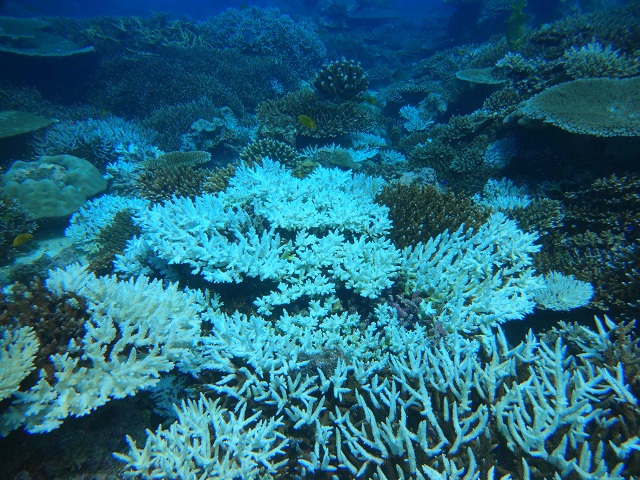
“Taking appropriate measures to control starfish densities is critically important as coral mortality due to the feeding activities of the starfish can reach levels similar to a severe coral bleaching event, as Seychelles' reefs experienced in 1998,” said Dr Engelhardt.
In low densities the crown-of-thorns starfish can be beneficial to coral reefs however in high densities it can turn into the ultimate coral predator by destroying large areas of reef in the space of only a few days. (Joanna Bluemel) Photo License: CC-BY
Senior Scientific Researcher of local NGO, the Marine Conservation Society Seychelles (MCSS), Joanna Bluemel, says the increase in the starfish’s numbers was noticed in 2013.
“We were shocked to find 20 to 30 times more crown-of-thorns starfish in the Beau Vallon Bay area. Based on Dr Engelhardt’s assessment, this is above sustainable levels,” she said.
“Moreover, 60 to 75% of coral reefs in the area especially had been completely wiped out, completely dead.”
The outbreak now appears to have spread to reefs and smaller islets between the second and third most populated islands of Seychelles, Praslin and La Digue.
Speaking to SNA, diver Ellen Lebihan, from the Octopus Diver Center, Anse Volbert, Praslin, said that they had “noticed an increase in the creature in some areas, especially near the Ave Maria rocks and other islets.”
Lebihan said that “some areas have now become completely barren as the creatures continue to feed and spread.”
With the starfish’s spawning season fast approaching and an expected increase in sea temperatures to at least 27 degrees Celsius by early next month, there were fears that the outbreak could reach plague proportions as countless more larvae of the starfish could be spread, if the adults were not removed in time.
An emergency assault
In an interview with SNA, the Ministry of Environment and Energy said the government viewed the abundance and associated risks of COTS, as a “national concern”.
The Ministry has since facilitated an emergency eradication programme within badly affected areas, with the help of marine partners including dive centres, NGOs, the Seychelles National Parks Authority and other volunteers.
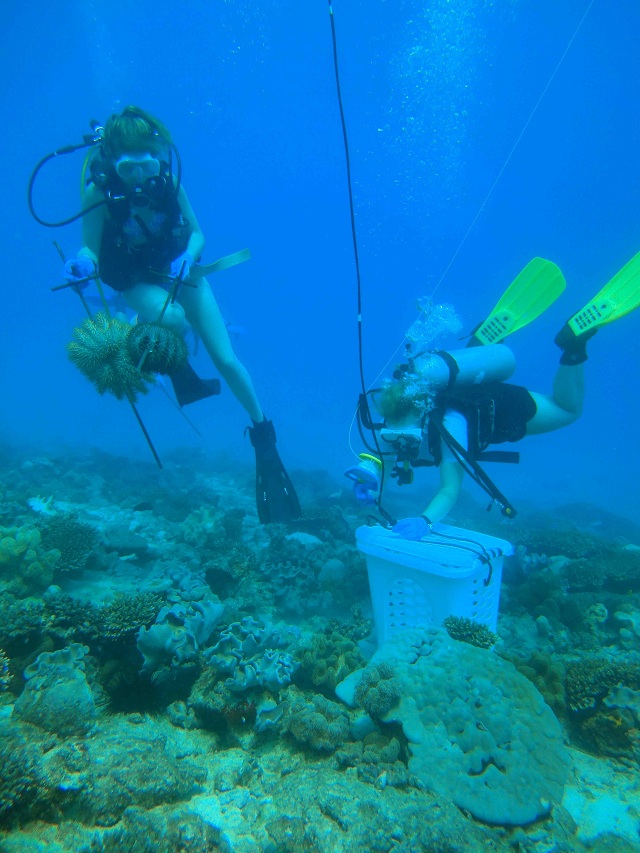
“With the limited funds, what we are doing is just removing the adult starfish and disposing of them. This method requires careful handling as the creatures is very venomous and their spikes are very dangerous,” said Dr Bluemel.
This resulted in the removal of over a thousand adults and juvenile COTS in the Beau Vallon area but Dr Bluemel said many more were still out there, especially smaller ones which were difficult to spot.
Local diver Mike Bamboche from the Ocean Dream Divers located in the vicinity of the area which had recently been cleared of starfish told SNA that there has been a remarkable improvement in affected areas, however, he reported that adults and juveniles could still be found in lower densities in other areas north of Beau Vallon.
A delicate operation is ongoing to physically remove adult and juvenile starfish from the affected areas. (Joanna Bluemel) Photo License: CC-BY
A similar operation has also been initiated in the vicinity of Praslin using volunteers and divers from local dive centres and non-governmental organizations.
Dr Bluemel said that four different age groups of starfish were collected during removals, including juveniles and large adults preparing to spawn.
Large females release millions of eggs into the ocean, fertilised by sperm released into the water by males. The breeding season takes place from November to January each year, although this can vary on water temperatures and other conditions.
Human interference
According to Dr Nirmal Shah, the Chief Executive Officer of a non-governmental environment organisation, Nature Seychelles, which has been involved in a reef restoration project on the Cousin Island Special Reserve for the past four years, similar outbreaks have occurred before in Seychelles.
“They were first detected in the 1970s and it worried the authorities so badly that international scientific assistance was requested and natural predators like the triton shell (lansiv) were protected,” said Dr Shah.
“COTS have been recognized as a serious threat ever since. No wonder the Seychelles One Rupee coin has on its flip side an image of a triton shell eating a crown of thorns starfish!”
Dr Shah believes this outbreak in particular may be very serious, particularly since the delicate reefs, still recovering from the 1998 El Niño coral bleaching event, would once again be in peril after showing positive signs of recovery in recent years.
Dr Engelhard said that such an outbreak can be related to human activities.
“Research we have conducted in Australia has clearly shown that human activities, such as increasing the levels of certain nutrient in sea water as well as over-fishing of the natural predators of the starfish can lead to outbreaks,” he said.
Natural predators of the starfish include the Giant Triton snail, harlequin shrimp and puffer fish.
Recovery will take years
According to Dr Engelhardt, it could be another ten to fifteen years before the hard coral can restored to its pre-outbreak levels.
But Dr Shah is not quite so optimistic about controlling the starfish, warning that attempts to control the outbreaks would be expensive and unsustainable without addressing the root cause of the problem, namely the loss of the starfish’s natural predators and an overabundance of nutrients in the water.
“In Australia it is said that efforts to control COTS have been expensive and ineffective,” he explained, adding that in 2003, $3 million was spent to try to control a plague of the starfish.
“These methods involved cutting up the animals, which tend to re-grow their arms, taking them out of the water to dump on land which is very tedious and difficult, or injecting them with a single shot of poison.”
Youtube video showing crown-of-thorn star fish at different locations in Seychelles waters.(Veronique Vanacore) Video License: All Rights reserved
A fine-scale survey is now underway, both to further assess the presence of COTS in other areas and to determine the most effective solution to control their spread.
The survey is being coordinated by the Seychelles National Parks Authority and, according to Ronley Fanchette, the Director for Wildlife, Trade and Conservation in the Seychelles Ministry of Environment and Energy, will assess the abundance and distribution of COTS within Marine Protected Areas.
Other NGOs, such as the Island Conservation Society and Nature Seychelles are conducting surveys outside marine park areas.
“We also receive reports from dive centres whenever they come across large density of COTS in a particular area,” said Fanchette, who added that additional funding was being sought from the Indian Ocean Commission to find long-term solutions to the problem.
Environment- See more at: http://www.seychellesnewsagency.com/articles/1469/Outbreak+of+thorns+Venomous+starfish+threatens+coral+reefs+in+Seychelles#sthash.CwDaUtuE.dpuf


 Tue, 21 October 2014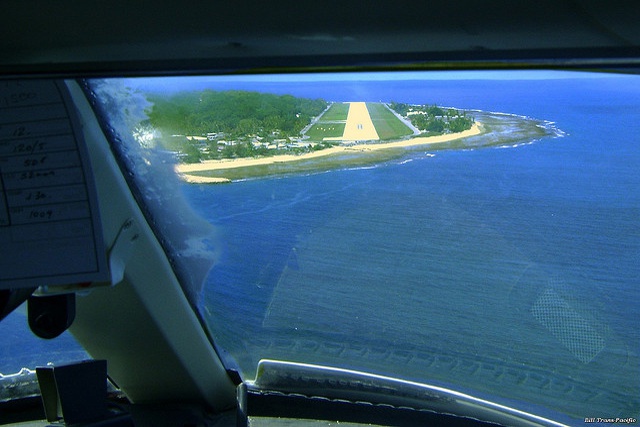


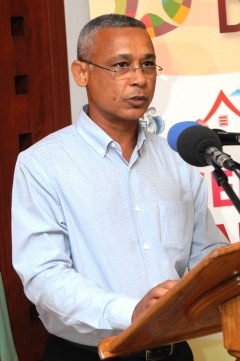 In his speech to mark the occasion, the chief executive of the Seychelles Planning Authority Gerard Hoareau said the event celebrated a further milestone which showcases the persistent effort of President James Michel to modernise government services through state of the art technology.